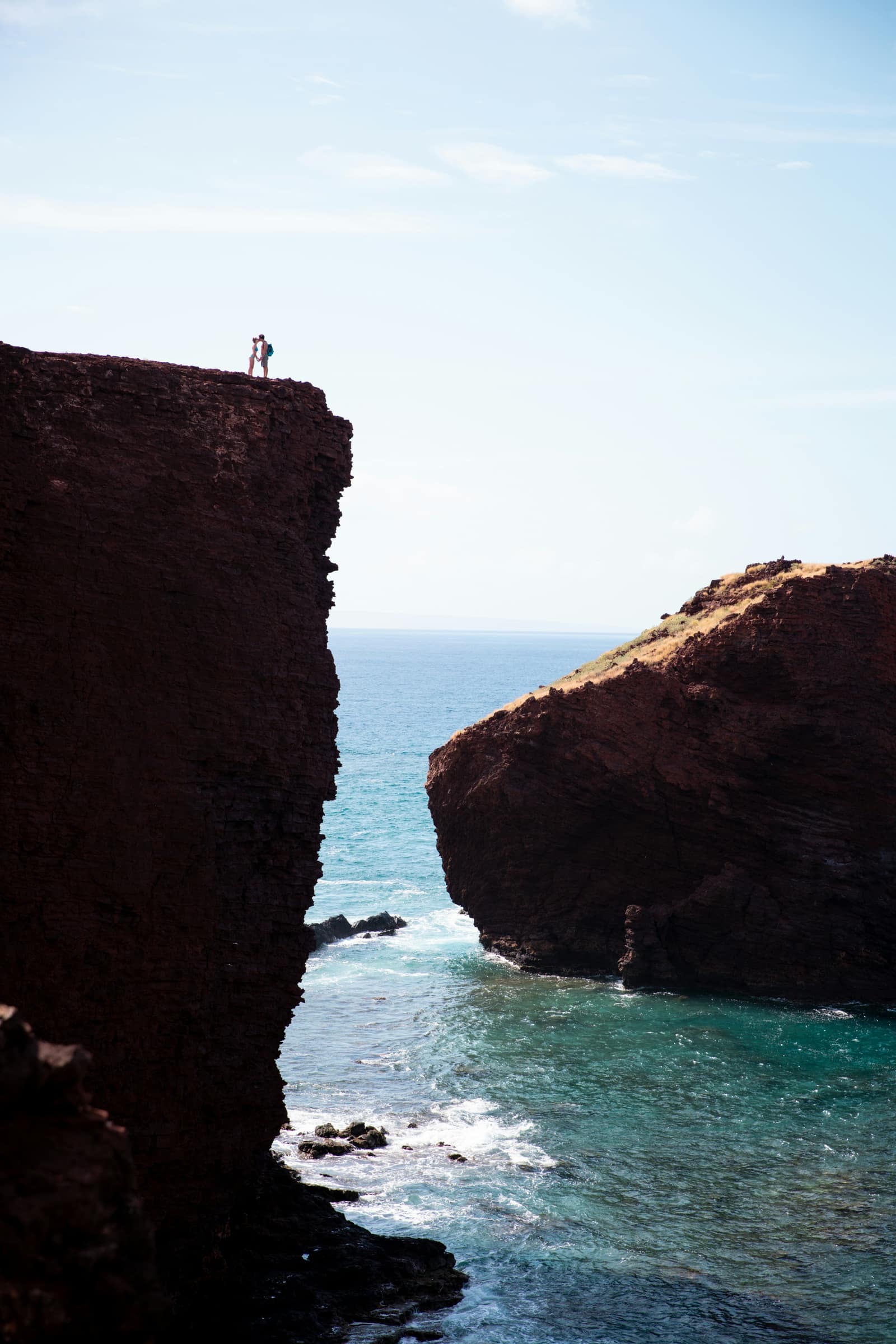
Getting to it, and getting things to it.
Lāna'i has one small airport and one primary road network, and nearly everything the island needs, from lumber to appliances to a spare part for a pool pump, arrives by air or by the Young Brothers barge from Honolulu. There is no calling a big-box store an hour away. A property owner considering Lāna'i should understand this before anything else: what arrives on the island is what was planned for, and planning happens on weeks of lead time, not days.
Most owners fly into Lāna'i Airport or take a passenger ferry from Maui. Both routes reward advance planning. Vehicle access, freight timing, and the condition of roads leading to a coastal residence can matter more here than they would on a larger island. Owners make their own arrival arrangements.
The practical consequence for a buyer is simple: factor logistics into the decision itself, not into an afterthought once escrow closes. A residence that is straightforward to provision and staff is worth more in daily livability than one with slightly better views and a harder supply chain.
A part that would take an afternoon to source on Oʻahu can take a week here if it was not planned for. When an owner directly engages a vendor arriving from another island, LES may help with that vendor's ferry or airport arrival and property access. The owner remains responsible for the vendor's selection, scope, contract, direction, and payment.
Salt air, sun, and storms are not occasional. They are constant.
The northeast trade winds carry a fine salt load across the island for most of the year, and that salt settles on glass, stonework, metal hardware, mechanical systems, and landscape plantings without pause. A residence that is not on a regular maintenance schedule accumulates corrosion that stays invisible until it is expensive: a hinge that seizes, a railing that pits, an HVAC coil that fails years earlier than it should have.
Sun exposure is equally constant. Lāna'i sees strong, reliable UV year-round, and unprotected finishes, fabrics, and exterior surfaces fade and degrade faster here than in most mainland climates. Owners who assume a coastal home ages the way a temperate one does are often surprised, and the cost of that surprise is rarely small.
Storm risk adds a third layer. Hawaii's hurricane season runs roughly June through November, and wildfire risk has grown more serious across the islands in recent years as dry seasons intensify. Owners should plan for qualified providers to handle tree, roof, elevated, electrical, mechanical, and specialized hazard-mitigation work. LES's role is limited to its routine services and visible condition reporting.
Budgeting stewardship, not just acquisition, into the true cost of owning here is what keeps these costs predictable rather than surprising.
The residences that hold up best over a decade are, almost without exception, the ones on a real maintenance schedule from the first year rather than the ones that wait for a visible problem. Salt corrosion, sun-faded finishes, and storm damage all share the same trait: they are cheap to prevent and expensive to reverse, and the difference between the two paths is usually nothing more than a steward who walks the property regularly and knows what to look for.
A private island has a small, specific service economy.
Lāna'i's resident population is measured in the low thousands, and its tradespeople and specialty providers are correspondingly few. Owners benefit from identifying the qualified providers they may need before a time-sensitive issue arises.
Each outside provider should remain directly accountable to the owner. The owner selects the provider, confirms licensing and insurance, approves the scope, signs the contract, directs the work, and pays the provider.
At the owner's request, LES may share a known contact, coordinate the vendor's arrival and property access, and record that an authorized visit occurred. LES does not hire, subcontract, direct, or supervise the provider.
This separation keeps routine stewardship records clear and avoids blurring an independent provider's licensed or specialty work into LES's services.
A home you do not live in still needs people who do.
A residence occupied for a few weeks or months a year still needs routine attention. Grounds keep growing and the island keeps sending weather at the house whether or not anyone is inside it. Owners should decide who will provide routine grounds care, housekeeping, condition observations, and reporting between visits.
The owners who are happiest with their Lāna'i residences tend to be the ones who settled this question early and simply, with one accountable party who knows the house and reports clearly, rather than assembling a loose collection of part-time help who each know only a fraction of the property and answer to no one in particular.
Discretion matters here too. A small island means small circles, and an owner should be comfortable that whoever holds keys to the residence treats what they see, and what they know, as private by default.
It is also worth deciding early whether staffing means a resident household team, a visiting steward, or some blend of the two. Each model works, and each has real tradeoffs in cost, continuity, and the amount of daily attention the residence receives. What does not work, reliably, is deferring the decision and hoping the right people appear when the house needs them most.
A clear routine-care picture.
Ongoing LES stewardship can combine routine ground-level grounds upkeep, interior housekeeping, private-residence observations, arrival readiness, and concise records. The exact mix is set with the owner and limited to the services LES actually performs.
Licensed, elevated, permit, pest-control, tree, irrigation-system, and other specialty work is outside that routine scope. The owner directly engages any provider needed for that work.
Reporting ties LES's routine services together without taking control of outside work. An owner can see what LES observed, what routine work LES completed, what vendor access the owner authorized, and what still needs the owner's decision.
The island rewards those who plan for it honestly.
None of the realities above are reasons to hesitate on Lāna'i. They are reasons to plan for what ownership here actually requires, the same way a buyer would plan for property taxes or insurance. The owners who do best are the ones who treat stewardship as part of the purchase decision itself, not a problem to solve after the closing.
For a buyer, broker, or family office weighing a Lāna'i acquisition, the questions worth asking early are straightforward: who will watch this property when no one is here, who already knows the island's trusted trades, and who is accountable for the answer when something needs attention on short notice. A private conversation before you close is the easiest way to get honest answers to all three.