A Private Island Calls for a Private Practice.
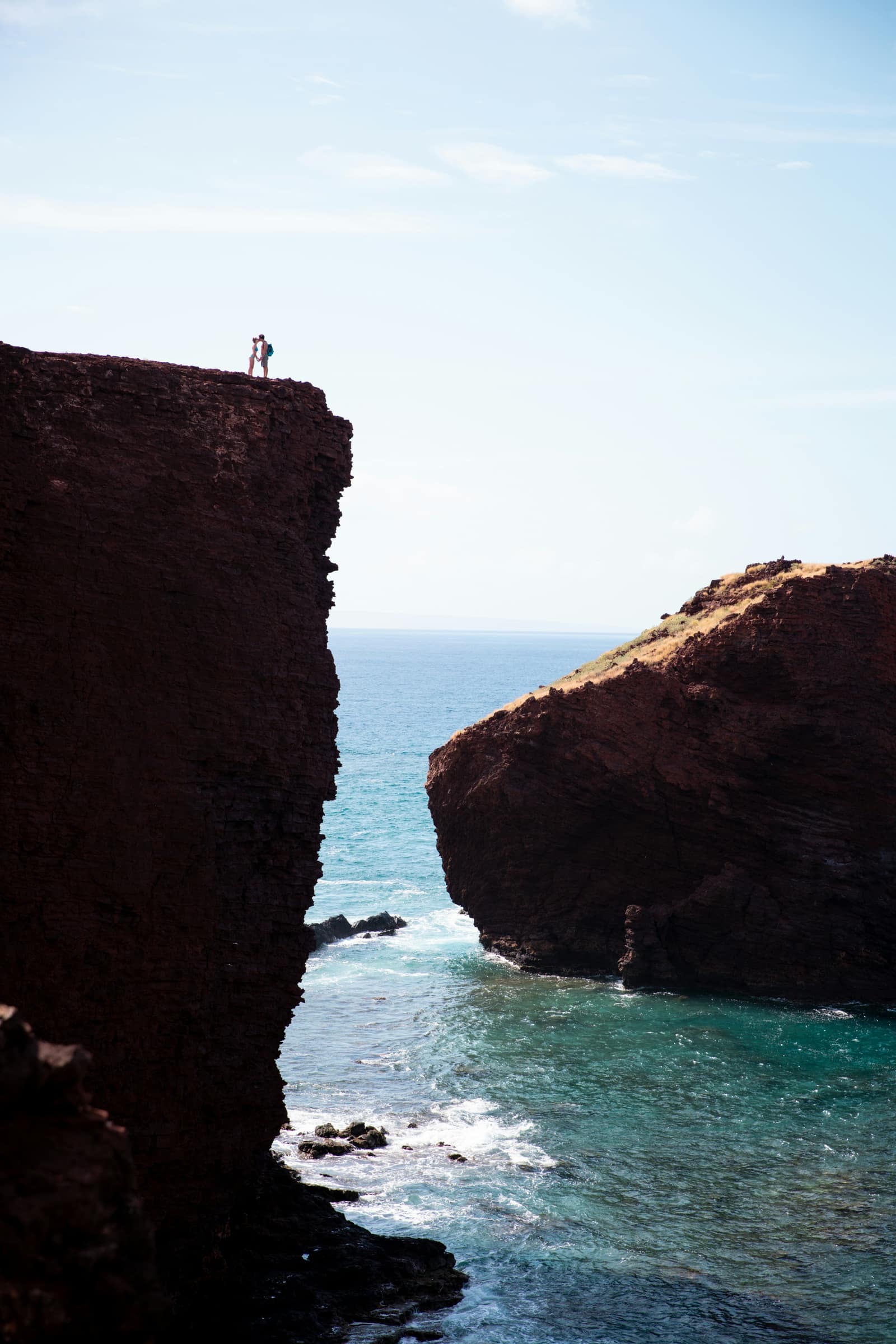
Lāna'i is one of the smallest and most deliberately unhurried islands in the Hawaiian chain. Understanding it is the first condition of caring for an estate here.
An island that resists the ordinary.
Lāna'i sits roughly nine miles west of Maui across the Auau Channel. With a resident population measured in the low thousands and a single main town, it operates at a remove from the institutional infrastructure that property owners on other islands take for granted. There is one primary road in and one small airport. The commercial ferry is the reliable supply line. What arrives on the island is what was planned for — there is no calling a larger city for a part or a specialist on short notice.
That constraint is not a limitation for those who know how to work inside it. It rewards deep local relationships, advance planning, and a steward who is already embedded in the island's small network of reliable tradespeople. For the uninitiated or the remotely managed, the same constraint becomes a source of friction and expense. Lāna'i selects for those who have learned its rhythms.
Most of the island's private estates sit on its drier south and west coasts, where the terrain opens toward the ocean and the afternoon light is long. The upland center, where the town sits, catches afternoon cloud and holds more moisture. Moving between those microclimates across a single property day is ordinary for a team that lives here. For an off-island manager, it is a condition they are reading about rather than feeling.
Trade winds, salt,
and two seasons.
The northeast trade winds define life on Lāna'i more than any other single force. Consistent through most of the year, they deposit a fine salt load across every exposed surface: glass, stonework, metal hardware, mechanical systems, and landscape plantings. An estate that is not attended to on a regular maintenance schedule accumulates damage that is invisible until it is expensive. The difference between a surface that holds and one that corrodes is measured in weeks of attention, not months.
The island has two seasonal patterns. The dry season runs roughly from April through September: low rainfall, reliable sun, reduced humidity, and wind that accelerates in the afternoon. This is when most owners prefer to be on island, and it is when arrival preparations carry the most scrutiny. The wet season, from October through March, brings higher rainfall in the uplands, elevated humidity along the coast, and intermittent strong Kona winds from the south that occasionally interrupt the trade pattern. Systems — generators, irrigation, water catchment, HVAC — work hardest in the wet season and are most often caught unprepared by owners who are not present.
The soil is predominantly red laterite in the uplands — iron-rich, compact, and quick to stain — and sandy loam closer to the coast where most estates sit. Landscape plantings must be selected for salt tolerance and drought resilience. Native species that evolved on Hawaiian coastlines often outperform introduced ornamentals that require intensive irrigation and still struggle. Understanding the soil is what allows a landscaper to make confident choices rather than expensive experiments.
What the island asks of those who care for it.
Most owners arrive by private aircraft into Lāna'i Airport, or by ferry from Lahaina or Maalaea. The airport handles a modest daily schedule and sees significant traffic during peak season; advance coordination with ground transport and property staff is the difference between a seamless arrival and a frustrating one. We prepare each residence fully before the owner lands: systems checked, house cooled to preference, grounds in order, provisions arranged to the household's standard.
Departure is equally deliberate. The house must be left in the state that will hold through the time away: systems protected, moisture managed, grounds maintained on the appropriate schedule, and any deferred work noted for the next visit or the next season. A residence left without this close-down discipline accumulates small problems that become large ones over a Hawaiian winter. That accumulation is what makes the first arrival of the following season feel like rescue rather than return.
For Lāna'i private estate owners, the island rewards those who commit to it genuinely — who build real relationships with the land, the trades, and the rhythms of the place. A steward who has done the same, for years, is the most direct expression of that commitment.
More about the practice and the island.
Quarterly Notes carries our longer observations on stewardship, season, and island life. When you are ready to speak directly, the inquiry form is the right place to begin.